How Decentralized Autonomous Organizations Work
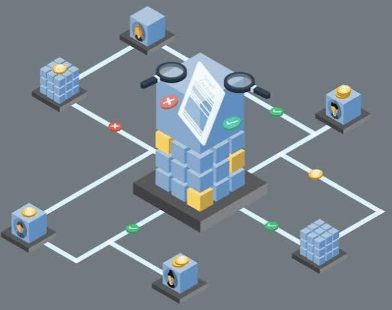
Decentralized autonomous organizations encode governance rules as programmable contracts on a blockchain. Members hold governance tokens to vote on proposals, allocate resources, and authorize actions that execute automatically when criteria are met. Incentives align stakeholder interests with transparent, auditable processes, while safeguards deter manipulation. Models vary by scope, tokenomics, and off-chain coordination. The balance between autonomy and accountability hinges on security, incentive design, and clear rule-sets, leaving open questions about resilience and real-world applicability as systems scale.
What Is a DAO and Why It Matters
A decentralized autonomous organization (DAO) is a governance structure that operates through rules encoded as computer programs on a blockchain, enabling collective decision-making without centralized control.
The concept emphasizes transparent, auditable processes and automated enforcement, reducing human bias.
DAO ethics and token ethics intersect, guiding accountability, participation, and value capture.
Clarity, security, and governance invariants shape feasibility, resilience, and the legitimate scope of decentralized autonomy.
How DAO Governance Works: Voting, Tokens, and Incentives
DAO governance translates encoded rules and stakeholder incentives into collective decision-making mechanisms. Governance structures formalize voting mechanics and balance token economics with incentive alignment, creating transparent pathways for proposal submission, debate, and approval. Mechanisms weigh stake, influence, and contributions, while safeguards deter manipulation. Outcomes reflect network preferences and risk tolerance, enabling adaptable, resilient coordination without centralized authority, sustaining autonomous value creation and freedom.
DAO Models and Their Use Cases
Users and researchers categorize DAO models by governance scope, token distribution, and mechanism design to map their suitability for specific use cases.
The analysis compares on-chain versus off-chain governance, treasury control, and participation thresholds, highlighting governance tokenomics and incentive alignment.
Cross chain interoperability enables asset and data portability, expanding use cases from grants to protocol steering while preserving modular, auditable decision frameworks.
See also: How AI Helps Detect Food Quality Problems
Pitfalls, Security, and Real-World Examples
The analysis now turns to practical vulnerabilities, risk factors, and real-world demonstrations of governance systems, examining how architectural choices, incentive structures, and operational workflows influence security outcomes.
This assessment highlights conflict of interest scenarios, exposure to governance capture, and the necessity of rigorous risk assessment practices.
Real-world examples illustrate systemic fragility, layered approvals, and the trade-offs between auditable transparency and agility.
Conclusion
In the grand crucible of decentralized governance, DAOs fuse code and consensus to forge self-enforcing systems. Voters, tokens, and incentives act as metronomes, aligning action with merit while audits cast a steady, unblinking light. Proposals flow like streams through programmable gates, executing only when thresholds are met, pruning chaos. Yet fragility lurks—the balance of security, incentives, and transparency must be maintained. When architects tether governance to verifiable rules, resilience emerges from disciplined automation.